Div 296: The Hidden Danger Behind Australia’s New Super Tax
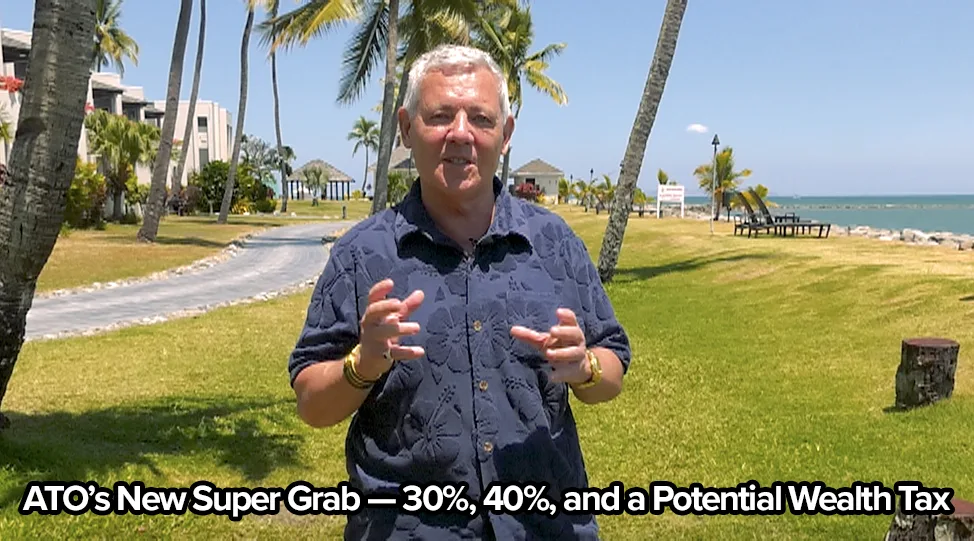
It’s Grant Abbott here from fresh from a two-and-a-half-day accreditation course and a two-day SAPEPAA conference. While the setting might be tropical, the topic that’s dominating every conversation is anything but relaxing — Division 296.
🌴 What Is Division 296?
Division 296, or Div 296, is the Australian Government’s latest move targeting high superannuation balances.
Under the proposed framework, individuals with super balances over $3 million will face:
- 30% tax on earnings between $3 million and $10 million, and
- 40% tax on earnings above $10 million.
On the surface, it looks like a “fairness” measure — but dig deeper, and the complexity (and danger) becomes clear.
⚠️ Why Div 296 Is So Difficult to Administer
The ATO will need data from every superannuation account an individual holds to correctly calculate this new tax.
Here’s where it gets tricky:
- What if one fund makes a loss while another shows a gain?
- How will capital gains be tracked across multiple funds?
- What happens when timing issues — like estate settlements — come into play?
The administrative burden alone could be enormous, and the margin for error, even greater.
💣 The Real Risk: A Hidden Death Tax?
One of the biggest concerns I see with Div 296 is what happens when someone passes away.
If a member dies, and it takes a year or two to finalise the estate or sell assets, the capital gains realised during that period could artificially push the account balance over the tax thresholds.
That means:
- 40% tax on the earnings above $10M
- Plus an additional 17% death benefits tax if benefits go to adult children
Add those together, and you’re suddenly looking at an effective 57% “death tax.”
That’s not superannuation. That’s super taxation.
Video: https://youtube.com/shorts/OsB8zEG3ePg
🧩 The Bigger Picture — From Super Tax to Wealth Tax?
The real worry is where this could lead.If Treasury decides to shift the language from “member of a super fund” to “taxpayer,” the implications are enormous.
That opens the door to a broad-based wealth tax, not limited to super — potentially applied to assets, estates, and investments.
We’ve moved from a 15% environment to 30%, then 40%. And this could be the start of something much larger.
🧭 What Should Advisors and Trustees Do?
- Stay Informed: This legislation is still developing. Track every Treasury and ATO release.
- Model Scenarios: Use predictive modelling to understand how estate events or market changes could push clients into higher brackets.
- Consider Structure: Review fund structures, reversionary pensions, and estate planning to minimise exposure.
- Educate Clients: Many still believe super is a safe tax haven — it’s time to reset expectations.
💬 Final Thoughts
We’ve been talking about fairness, but it feels more like a slow creep — from a low-tax super system into a high-tax wealth system.
It might take years for Div 296 to fully roll out, but the direction is clear.We need to plan, adapt, and stay one step ahead.
Grant Abbott
_Founder, _GrantAbbott.com
#Div296 #SuperTax #SMSF #WealthTax #FinancialPlanning #GrantAbbott #Superannuation #TaxStrategy #Fiji
Your client's situation
Whether and how this fits your situation is a conversation with Grant.
Ask the free strategist the what and the why, then book a private session to work through the how.